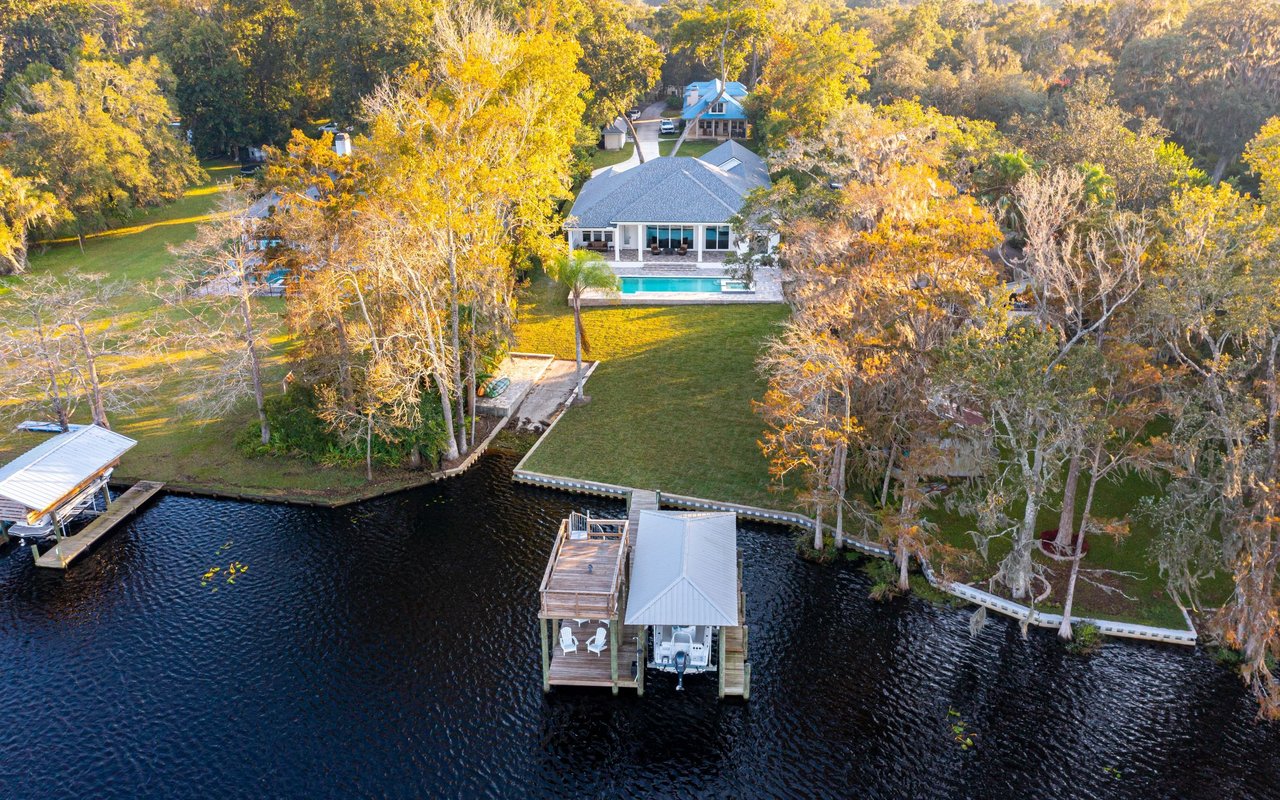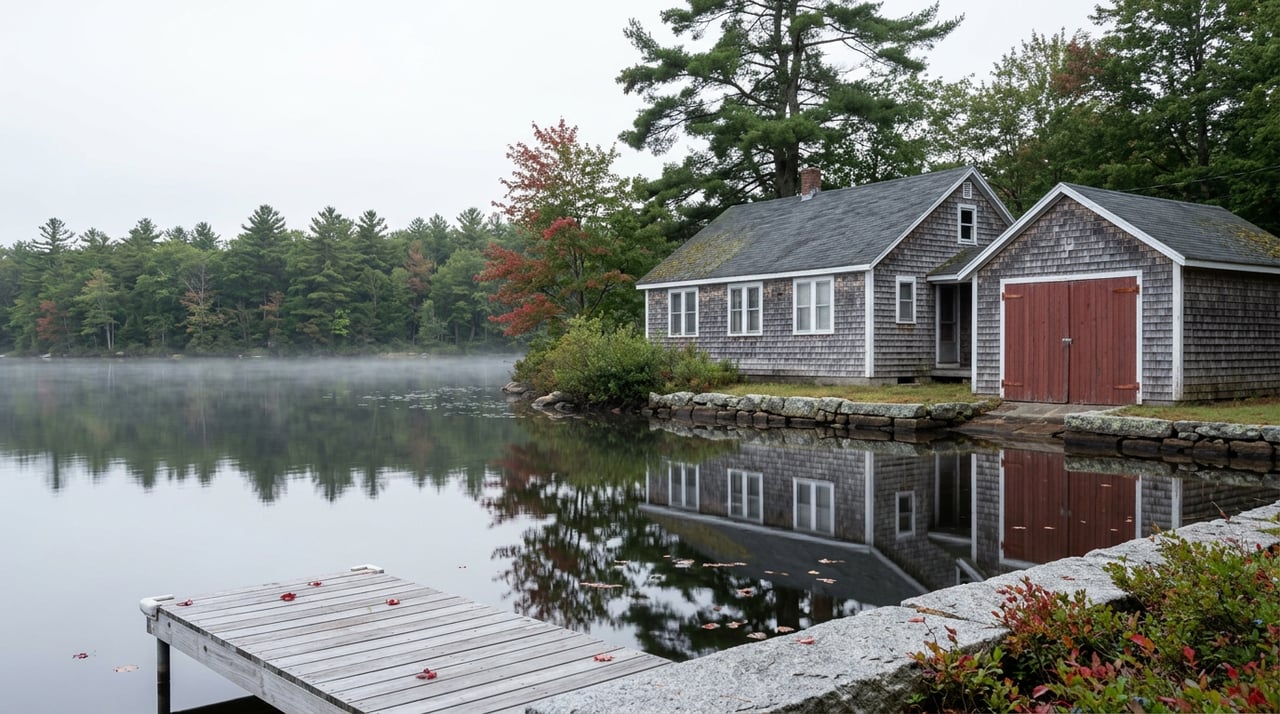
The owner of a lakefront parcel in Naples once applied for two permits to renovate a garage. That should have been routine. Instead, the Town of Naples Code Enforcement Officer denied both permits, citing insufficient shore frontage. The Board of Appeals went further, ruling that the renovated garage would count as a second residential dwelling unit on the lot, which would push the whole parcel out of compliance. The Superior Court agreed with the town. It took a ruling from the Maine Supreme Judicial Court in 2017 to settle the matter, and the Law Court sided with the property owner on both counts.
That case, known as 21 Seabran, LLC v. Town of Naples, is worth knowing if you own or plan to buy lakefront property in Naples, because it shows where the real friction sits in a waterfront transaction here. Every buyer and seller already knows to budget for a septic inspection. Maine has required one before the sale of shoreland property since 2020, and real estate agents mention it early and often. What far fewer people check, until it becomes a problem, is whether the structure itself is legally allowed to exist in its current form and whether it can be rebuilt if something happens to it.
The Rule Everyone Already Knows About
Maine's septic inspection law took effect January 1, 2020, extending a requirement that had applied to coastal properties since 2007 out to inland shoreland areas, including lakes. The Portland Press Herald covered the signing in April 2019, and the law's backers were explicit about which lake they had in mind. Sebago Lake, which forms Naples' southern border and supplies drinking water to roughly 200,000 Mainers, carries an estimated 4,000 lots within 200 feet of shore and about 2,700 septic systems feeding that narrow margin. The law gives a buyer nine months to complete the inspection if it wasn't feasible before closing, and WatchiLake says if the system fails, it has to be repaired or replaced within a year of the transfer.
That part of a Naples closing is now familiar. Sellers expect it, buyers' agents flag it, and most transactions move through it without much drama. If a system needs replacing, the cost in Maine typically runs from around $12,000 for a straightforward pressure-dosed system up toward $30,000 or more for a mound system on a lot with ledge or a high water table, sometimes higher still where the terrain forces a fully engineered design. That range gives a seller with an aging system real numbers to plan around before listing, rather than finding out mid-negotiation.
What That Inspection Can't Tell You
Here is the gap. A passing septic inspection tells you the wastewater system is functioning. It says nothing about whether the garage, the bunkhouse, the screened porch, or the cottage itself sits where Naples' own zoning currently allows a structure to sit. Those are two separate systems of law, administered by two different offices, and satisfying one gives you no information about the other.
Naples adopted its Shoreland Zoning Ordinance in 1974 and has revised it several times since, most recently in 2024. Under the current ordinance, a huge share of the older camps and cottages along Long Lake, Brandy Pond, Trickey Pond, and the Naples side of Sebago sit closer to the water than a new structure would be allowed to today. That's not a violation. It's what the ordinance calls a legally nonconforming structure, built before the setback rules existed and grandfathered in as long as it isn't expanded toward the water.
The trouble starts when something happens to that structure. If it's damaged or destroyed by 50 percent or less of its market value, the owner can rebuild it in the same footprint, provided a permit is pulled from the Code Enforcement Officer within a year of the damage. Cross that threshold and the path gets far less certain, often requiring board review rather than a straightforward permit. Separately, the ordinance draws a hard line 25 feet from the normal high-water mark: no expansion is allowed inside that line, period, even if the addition wouldn't make the structure any less conforming than it already is.
Here's how those two systems actually compare on a Naples lakefront parcel:
| Septic (state law) | Structure (Naples ordinance) | |
|---|---|---|
| Who checks it | Inspector, before sale | Code Enforcement Officer, on permit application |
| What triggers a problem | Malfunction found during pre-sale inspection | Fire, storm damage, or a planned addition |
| What happens if you fail | Repair or replace within 1 year of transfer | Rebuild rights depend on % of damage and distance from water |
| Where the dispute lands | Rarely litigated | Can reach the Board of Appeals, then the courts |
The Case That Tested It, and the One the Town Won
21 Seabran is the case that shows what happens when the town's own interpretation gets challenged. The Code Enforcement Officer read the garage renovation as creating an extra dwelling unit and denied it on frontage grounds. The Board of Appeals agreed. The Law Court didn't. It found the Board's classification of the structure as a residential dwelling unit was wrong, and that the parcel actually met the minimum lot size requirements under both state and local rules. A dispute over a garage that reached the state's highest court.
It's worth knowing the town doesn't always lose. In an older case, Nyczepir v. Town of Naples, three contiguous lots on Trickey Pond ran into a dispute over a single word. The 1974 ordinance had allowed certain nonconforming "lots" to be used under the old rules. When the town revised its ordinance in 1986, that word became "use," a change the town called a clerical fix and the landowners called a real change in their rights. The Law Court sided with the town, upholding the more restrictive reading.
Neither case is really about wastewater. Both are about whether the physical structure on a lakefront lot conforms to rules that have shifted since the building went up, and whether the town's read on that structure holds up. That's the risk a septic inspection will never surface for you.
What to Check Before You List or Offer
A buyer or seller who wants to avoid becoming the next test case has a short, specific list to work through, separate from the septic conversation:
- Ask the Naples Code Enforcement Office whether the structure is on file as legally nonconforming, and get that in writing rather than relying on how long it's been standing.
- Have the distance from the normal high-water line to the structure measured, not estimated. Twenty-five feet is a hard line in Naples, and eyeballing it from the dock isn't good enough.
- If you're the seller, find out whether any additions were ever made without a permit. An unpermitted expansion doesn't just risk a fine. It can undo the structure's nonconforming status entirely.
- If you're the buyer and you're picturing a bigger porch or a second story someday, ask the Code Office directly whether that addition is possible given the setback, before you factor it into your offer.
- For septic specifically, budget separately: get the inspection scheduled early, and if replacement looks likely, price the system type your soil and setback will actually require, not the cheapest option on the list.
Four Bodies of Water, One Set of Rules That Doesn't Bend for Any of Them
Naples sits where four different bodies of water meet: Sebago Lake, Long Lake, Brandy Pond, and Trickey Pond. The Lakes Environmental Association has monitored Brandy Pond's water quality since 1972 and has tracked variable-leaf milfoil there since divers first found it in 2003. That history of water-quality monitoring sits alongside the state's septic rules and Naples' shoreland ordinance. The rules aren't unique to any one pond in town. A camp on Trickey Pond and a cottage on Sebago answer to the same setback line and the same 50 percent threshold.
For a buyer weighing a Naples purchase against a Casco or Harrison lot, that consistency matters, and so does thinking through the two kinds of protection a waterfront property actually needs: knowing what you're legally allowed to do with the structure, and having the right coverage in place once you own it. Those are two different conversations, and it helps to have them before you're mid-transaction rather than after.
A Few Questions Worth Asking Directly
Does the septic inspection law apply the same way on Trickey Pond as it does on Sebago Lake? Yes. The state law applies to shoreland areas generally, not to specific lakes, so a sale on any of Naples' four water bodies triggers the same pre-sale inspection requirement.
Can I rebuild a nonconforming camp if it burns down? Under Naples' ordinance, if the loss is 50 percent or less of the structure's market value, you can generally rebuild in place with a permit pulled within a year. Beyond that threshold, the path is far less certain and usually involves the Board of Appeals rather than a routine permit.
If you're weighing a purchase or a sale on Long Lake, Brandy Pond, Trickey Pond, or the Naples shore of Sebago, Oberg Agency can walk through both sides of the transaction with you, the septic timeline and the zoning history on the structure itself, along with what it takes to insure the property once it's yours. Contact us before you list or write an offer, not after.
This article is general information, not legal, tax or financial advice. Consult a qualified professional about your situation.