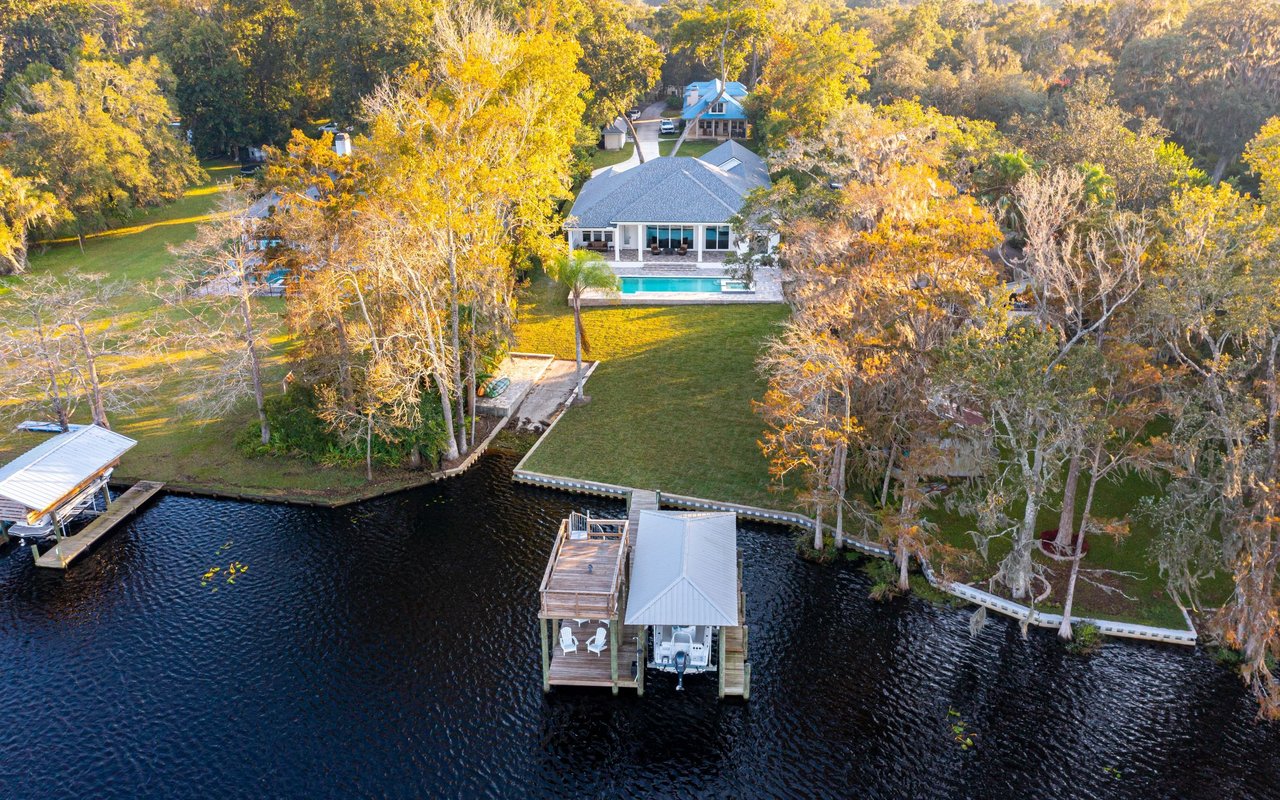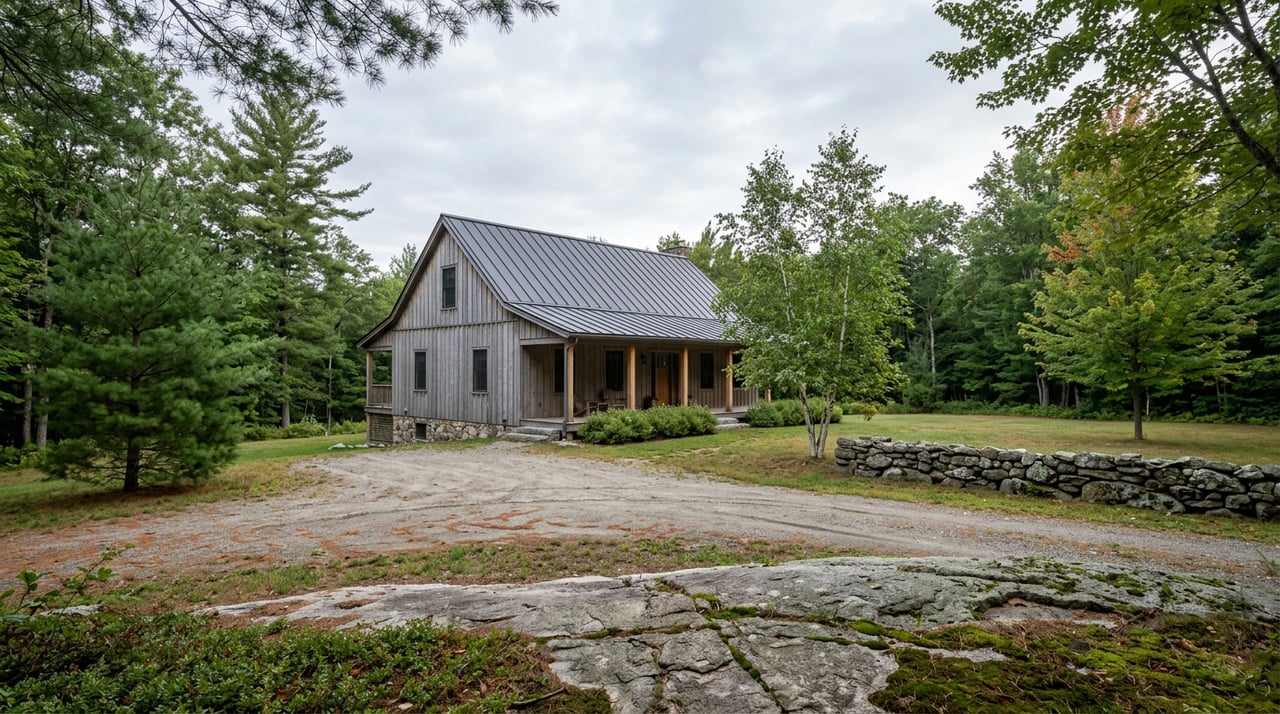
Drive out past Fryeburg Academy toward Stow, and the land opens up fast. Hayfields give way to stands of white pine and maple, the Saco River cuts its slow oxbows through the valley floor, and on a clear day the ridgeline of New Hampshire's Presidential Range sits right at the edge of what you can see. Somewhere in that view are two ten-acre parcels, both wooded, both a similar walk from a town road, both offering the same rough shot at privacy and a future building site. One is listed at a price that pencils out to roughly $7,000 an acre. The other is closer to $27,000. Same town. Same kind of ground. Four times the price.
The gap isn't a mistake, and it isn't really about the view. It comes down to a piece of paper most buyers never ask to see: whether the land is enrolled in one of Maine's current-use tax programs, and what happens the day that enrollment ends.
The Split Hiding Inside the Average
As of early September 2026, land search platforms show 65 properties for sale in and around Fryeburg, averaging about $17,455 per acre across roughly 346 acres. That town-wide number is the one most buyers see first, and it's the one that tells you the least.
Break the same inventory into two groups and the picture changes. Land tagged as residential, meaning it reads as closer to build-ready, averages around $26,581 per acre. Land tagged as undeveloped averages closer to $7,033 per acre. That's not a rounding difference. It's a parcel priced at a quarter of its neighbor's rate for what can look, from the road, like the same trees.
Part of that gap is simple math. Undeveloped listings in Fryeburg tend to run larger, and price per acre naturally drops as total acreage climbs. A 182-acre parcel on Kezar Pond, marketed as a "kingdom lot" for its size and privacy, will always post a lower per-acre number than a tidy two-acre building lot near the village. Buyers generally understand that part. It's on the listing sheet.
The part that isn't on the listing sheet, and the part that actually changes what you'll pay after closing, is whether the land is enrolled in Tree Growth, Farmland, or Open Space classification under Maine's current-use tax law.
What "Current Use" Actually Buys the Seller
Maine's current-use programs let landowners have forest, farm, or open land assessed at its productive value rather than its market value, which usually means a lower annual tax bill. Enrollment isn't automatic. An owner applies through the municipality, and the Maine Department of Agriculture, Conservation and Forestry says the Tree Growth program requires at least ten acres of forest land managed under a written plan, with per-acre valuations set by county and forest type each year, as explained by Maine Revenue Services.
For a landowner who wants to keep a woodlot as a woodlot for the next twenty years, this is a straightforward benefit. Lower carrying costs, no pressure to develop, a program built for exactly that use.
For a buyer eyeing that same parcel as a future homesite, the calculus is different, because the tax savings the seller has been enjoying come with a condition attached to the deed's history, not the deed itself. Change the use, and the state wants some of that savings back.
The Penalty Nobody Mentions at the Open House
If land classified under Tree Growth is withdrawn from the program, whether because the new owner clears it, subdivides it, or simply stops meeting the forestry requirements, Maine Revenue Services assesses a withdrawal penalty. The amount runs between 20 and 30 percent of the difference between the parcel's Tree Growth value and its fair market value, with the percentage tied to how long the land has been enrolled. The Farmland program works differently: pulling land out of that classification means paying back five years of the taxes that would have been owed at market value, plus interest.
Run a simple version of the math. Say ten acres carries a Tree Growth valuation of $3,000 and a fair market value of $25,000. The difference is $22,000. At a 25 percent penalty rate, that's roughly $5,500 due at the point of withdrawal, on top of whatever the land itself cost. None of that shows up in the list price. It shows up the year you break ground.
This is the detail that makes the $7,033-per-acre listing worth a second look rather than an automatic pass. The land might be genuinely underpriced for what it is. It might also be underpriced because the number reflects a tax classification the current owner benefits from and the next owner inherits the exit cost of.
Before writing an offer on wooded acreage in Fryeburg, it's worth asking the seller's agent directly whether the parcel carries a Tree Growth, Farmland, or Open Space classification, and if so, requesting the enrollment paperwork. The town assessor's office can confirm current status and, in many cases, provide the parcel's current-use valuation, which lets you or your agent estimate the potential penalty before it becomes a closing-week surprise. Maine Revenue Services also publishes the underlying rules in Property Tax Bulletin No. 19, which lays out the penalty calculation in more detail than most listing sheets ever will.
The Road Tells the Same Story
The current-use pattern isn't limited to the tax code. A 52-acre high-ground parcel in Fryeburg's Highland Park area, part of the Highland Park Road Association and reachable by a deeded 66-foot right-of-way, charges annual road fees of $150 for an undeveloped lot and $700 for a residential one. The land itself doesn't change. What you're doing with it does, and the cost structure follows the use, not the acreage.
That's a useful habit to carry into any Fryeburg land search: the sticker price describes the land as it sits today. The real cost structure describes what happens when you change what it's for.
What a Fryeburg Land Search Actually Rewards
None of this means raw acreage should be avoided. Land backing up to the White Mountain National Forest, or running along the Saco River where it winds through Fryeburg, holds genuine appeal for buyers who want distance from neighbors and easy access to public land without ever building on every acre they own. Some Fryeburg parcels are priced low because they're genuinely remote, oddly shaped, or landlocked behind another lot. Current-use enrollment is one factor among several, not the only one.
The point is that it's a factor almost nobody checks until it's too late to negotiate around it. A short list worth working through before you offer:
- Ask whether the parcel is currently classified under Tree Growth, Farmland, or Open Space, and request the enrollment documentation.
- Confirm with the Fryeburg assessor's office how long the classification has been in place, since the withdrawal penalty percentage scales with enrollment length.
- If you plan to build, ask your agent to estimate the potential withdrawal penalty using the parcel's current-use value versus its market value, and factor that into your offer.
- Check whether the parcel sits within a road association, and if so, review the fee structure for both undeveloped and improved status.
- Confirm access rights in writing.
If You're Already Picturing a Foundation
Buyers who reach this stage of a land search have usually stopped thinking about the parcel and started thinking about the house. That's the right instinct, and it's also the moment to start thinking about coverage alongside financing. Vacant land, land mid-construction, and a finished home carry different insurance needs, and a withdrawal penalty triggered by breaking ground is worth budgeting for right alongside the septic design and the driveway permit, not after.
A Few Questions Land Buyers Ask Early
If the seller already told me the land is enrolled, do I need to do anything else? Get it in writing and get the number. A verbal mention of "current use" tells you the land is classified. It doesn't tell you the current-use valuation, the fair market value the assessor would apply on withdrawal, or how many years the enrollment has run, all of which determine what withdrawal would actually cost.
Land in the Fryeburg area rewards patience and a close read of the paperwork more than it rewards chasing the lowest per-acre number on the page. If you're weighing a parcel and want help sorting a genuine deal from a deferred cost, Oberg Insurance & Real Estate Agency has spent decades on both sides of that question in this exact stretch of Maine's Lakes Region, and we're glad to walk through a specific listing with you before you write the offer.
This article is general information, not legal, tax or financial advice. Consult a qualified professional about your situation.